How Regional Licensing Rules Reshape Loyalty Rewards Across Leading Digital Wagering Operators
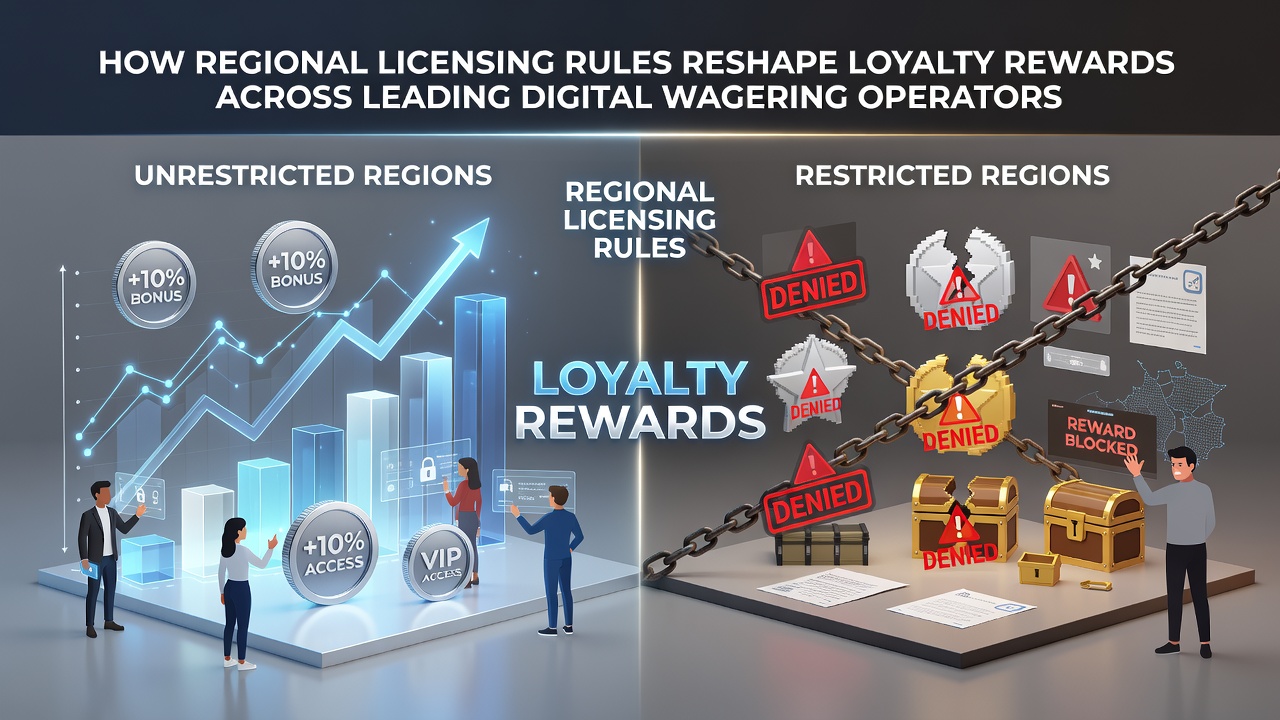
Regional licensing frameworks continue to drive significant changes in how leading digital wagering operators structure their loyalty rewards programs, with rules that differ sharply by jurisdiction forcing adaptations in points accumulation, redemption options, and bonus eligibility. Operators licensed across multiple territories must maintain separate reward tiers that comply with local statutes, and this fragmentation often results in players receiving different cashback percentages or free bet values depending on their registered location. Data from regulatory filings shows that compliance costs associated with these variations have risen steadily since 2024, prompting many platforms to recalibrate reward generosity on a per-market basis rather than offering uniform global schemes.
Variations in Reward Structures by Licensing Region
North American markets illustrate the impact clearly, where state-by-state rules in the US and provincial frameworks in Canada impose distinct requirements on player incentives. In New Jersey, for instance, operators must tie reward redemptions to verified in-state activity, which limits the transferability of accumulated points across borders and reduces the scope for cross-jurisdictional promotions that once allowed players to combine balances from multiple accounts. Observers note that similar constraints appear in Ontario, where the Alcohol and Gaming Commission of Ontario requires detailed reporting on loyalty program outcomes, leading platforms to cap maximum monthly redemptions at levels calibrated to local player spending patterns. Meanwhile, Australian state regulations emphasize harm minimization, which has translated into mandatory cooling-off periods before loyalty points convert to cash or credits, a rule that became stricter following updates finalized in early 2026.
European jurisdictions add another layer of complexity because licensing authorities in Malta, Sweden, and the Netherlands each enforce different transparency standards for reward terms. Operators active in these markets maintain segmented databases that track player location in real time so that reward offers automatically adjust to meet disclosure rules and spending caps. Research indicates that these technical adjustments have increased operational overhead, with some platforms reporting a 15 to 20 percent rise in backend development expenses tied directly to loyalty system localization between 2025 and mid-2026.
Impact on Player Behavior and Operator Strategies
Players who move between regions or maintain accounts under different licensing regimes often discover that their reward progress resets or converts at unfavorable rates when crossing boundaries. This reality has encouraged operators to introduce region-specific loyalty clubs that mirror the strictest local rules, thereby avoiding penalties while still providing competitive incentives within each market. A study released by the University of Nevada, Las Vegas in July 2026 documented how operators in regulated US states reduced the frequency of high-value reward drops by an average of 12 percent compared with less restrictive offshore environments, attributing the shift to licensing clauses that limit bonus frequency and value.
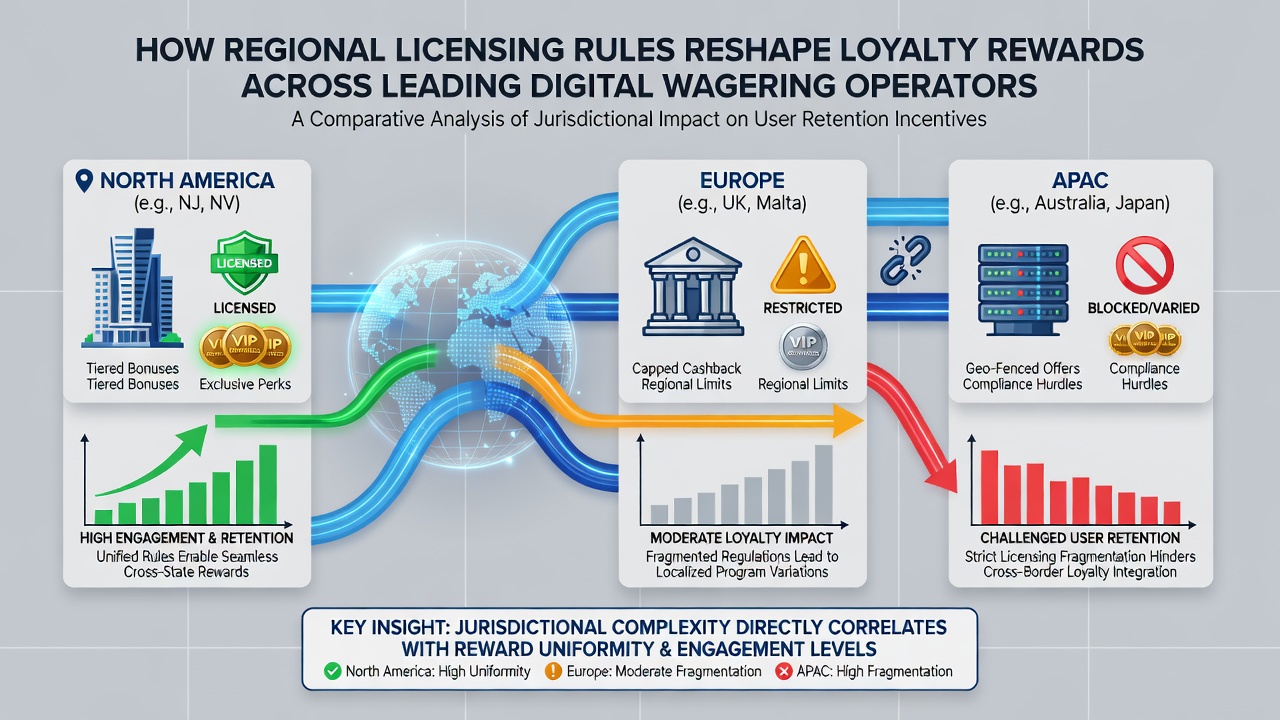
Leading operators have responded by developing modular reward engines that activate or deactivate features based on geolocation data and license type. These systems allow a single platform to deliver cashback rates that range from 0.5 percent in tightly regulated European markets to 2 percent in certain US states where rules permit higher percentages. Figures released by industry analysts show that such flexibility has helped maintain player retention metrics even as overall reward budgets face downward pressure from compliance requirements. And yet the same data reveals that operators with fewer regional licenses experience less fragmentation and can sustain more consistent reward offerings across their entire user base.
Developments Emerging in August 2026
New licensing amendments scheduled to take effect in August 2026 in several Canadian provinces and select European countries introduce further reporting obligations around loyalty program fairness. These changes require operators to publish average redemption values and any geographic disparities in reward availability, a move that has already prompted some platforms to standardize lower reward tiers across borders to simplify compliance. Researchers tracking these shifts have observed that operators with multi-jurisdictional footprints are accelerating investments in automated compliance tools, while smaller regional players focus on deepening loyalty within single-license markets where customization remains simpler. The net effect appears in reduced cross-border reward portability, which limits the appeal of maintaining multiple accounts for players seeking to maximize point accumulation.
Conclusion
Regional licensing rules continue to fragment loyalty rewards in digital wagering, compelling operators to balance compliance demands against player expectations for consistent value. As frameworks evolve through 2026 and beyond, the ability to manage segmented reward systems efficiently will determine which platforms sustain competitive loyalty offerings across diverse markets.